
Welcome to the official website of SHENZE COUNTY SHENGYE SCREEN PRINTING EQUIPMENT CO.,LTD!
National Enquiry Hotline:
008613080463309
SHENZE COUNTY SHENGYE SCREEN PRINTING EQUIPMENT CO.,LTD
|
Hebei Province,China Wechat: 008613080463309 |
The principle of silk screen squeegeeIssuing time:2024-07-31 11:07 The screen squeegee is composed of five elements, namely the screen printing plate, the squeegee plate, the ink, the printing table and the substrate. The basic principle of the screen printing squeegee is to use the basic principle of screen printing plate graphic part of the mesh permeable ink, and the non-graphic part of the mesh impermeable ink for printing. When printing, ink is poured on one end of the screen printing plate, and a certain pressure is applied to the ink part on the screen printing plate with a scraping scraper, and at the same time it moves towards the other end of the screen printing plate. The ink is squeezed onto the substrate by the scraper from the mesh in the graphic part during movement. Due to the viscous action of the ink and make the imprint fixed within a certain range, the scraper is always in line contact with the screen printing plate and the substrate in the printing process, and the contact line moves with the movement of the scraper, because the screen printing plate and the substrate maintain a certain gap, the screen printing plate during printing produces the reaction force to the scraper through its own tension, and this reaction force is called the rebound force. Due to the effect of resilience, the screen printing plate and the substrate are only in mobile line contact, and the other parts of the screen printing plate are separated from the substrate. The ink and the screen are broken to ensure the dimensional accuracy of the printing and avoid rubbing the substrate. When the squeegee scrapes the entire layout, it lifts up, and the screen plate lifts at the same time, and gently scrapes the ink back to its original position. So far, this is a printing trip. Silk screen squeegee belongs to stencil printing, and together with lithography, embossing, and gravure printing, it is known as the four major printing methods. Engraving printing includes transcription plates, perforated plates, spray and screen squeegees, etc. The principle of stencil printing is that when printing on the printing plate (the hole that can pass through the ink is made on the plate base of the paper film plate or other plates), the ink is transferred to the substrate (paper, ceramic, etc.) through the hole of the stencil through a certain pressure to form an image or text. Transcription printing, the simplest form of stencil printing, began in the late 19th century. This kind of printing is made on special wax paper, which is made into a wax paper graphic plate by a typewriter or iron pen, and the wax paper plate is printed with an ink roller, and the ideal printing effect can be obtained on the substrate. In stencil printing, the most widely used screen printing squeegee. The screen printing squeegee is to stretch the silk fabric, synthetic fiber fabric or metal wire mesh on the screen frame, and use the method of hand-engraved paint film or photochemical plate making to make the screen printing plate. Modern screen printing squeegee technology is to use photosensitive materials to make screen printing plates through the method of photographic plate making (so that the screen holes of the graphic part of the screen printing plate are through holes, and the screen holes of the non-graphic part are blocked) When printing, the ink is transferred to the substrate through the mesh of the graphic part through the mesh of the graphic part, forming the same graphic and text as the original. The screen printing scraper equipment is simple, easy to operate, simple to print and plate-making, low cost and strong adaptability. Silk screen squeegee has a wide range of applications, and common prints are: black oil paintings, posters, business cards, bound covers, commodity signs, and printed and dyed textiles. The squeegee should be washed and put away after use, and the squeegee should not be stressed, which will make the squeegee more durable. 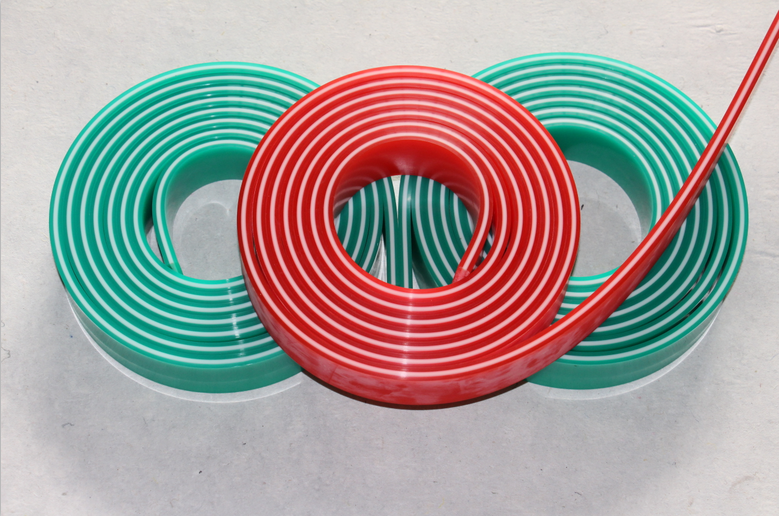 |
 Hezhuang Development
 008613080463309
 dalujg@aliyun.com
Scan to add WeChat
Address:Hezhuang Development Zone, Shenze County, Shijiazhuang City,Hebei Province,China
Tel:+8613080463309
Fax: 0311-83592168
Email:dalujg@aliyun.com
QQ:736449656
SHENZE COUNTY SHENGYE SCREEN PRINTING EQUIPMENT CO.,LTD